To be honest, when I first encountered Coco & Eve, I wasn’t drawn in by the “natural” label; I was attracted by its hair care performance. However, after delving deeper, I realized its core selling point wasn’t just a single benefit, but a comprehensive product philosophy centered on “gentleness, sustainability, and a botanical-based system.”
This became especially clear once I started paying attention to ingredient safety—such as suitability for sensitive skin and use during pregnancy. The brand’s identity shifted from being just a “functional hair care brand” to something more akin to a “clean-ingredient tropical botanical care system.”
I. The Brand’s Core Philosophy: A “Low-Burden Beauty” Ethos from Bali
Coco & Eve draws its inspiration from Bali’s natural beauty culture. Its product philosophy doesn’t simply chase aggressive results; instead, it emphasizes “gentleness for long-term use.”
Upon examining its formulation system, I discovered several key commonalities:
First, the entire product line is Vegan and Cruelty-Free. While avoiding animal testing is no longer a rarity among hair care brands, Coco & Eve takes it a step further by avoiding animal-derived ingredients even in the base formulations.
Second is its “low-irritation structure.” The products generally avoid sulfates, parabens, and certain traditional preservative systems. This means the cleansing and care systems lean towards gentleness rather than the harsh, stripping, or highly irritating nature of products designed for instant, aggressive results.
Third is its sourcing of tropical botanical ingredients. Rather than simply adding a token plant extract, the brand builds its core structure around tropical fruits and botanical oils, effectively merging hair care and skincare philosophies.
Overall, the brand feels like a “long-term nourishing system” rather than a “quick-fix, high-potency” solution.
II. Breakdown of Key Botanical Ingredients: Where Does That “Gentle Feel” Come From?
To understand Coco & Eve’s gentleness, one must look at its core botanical system.
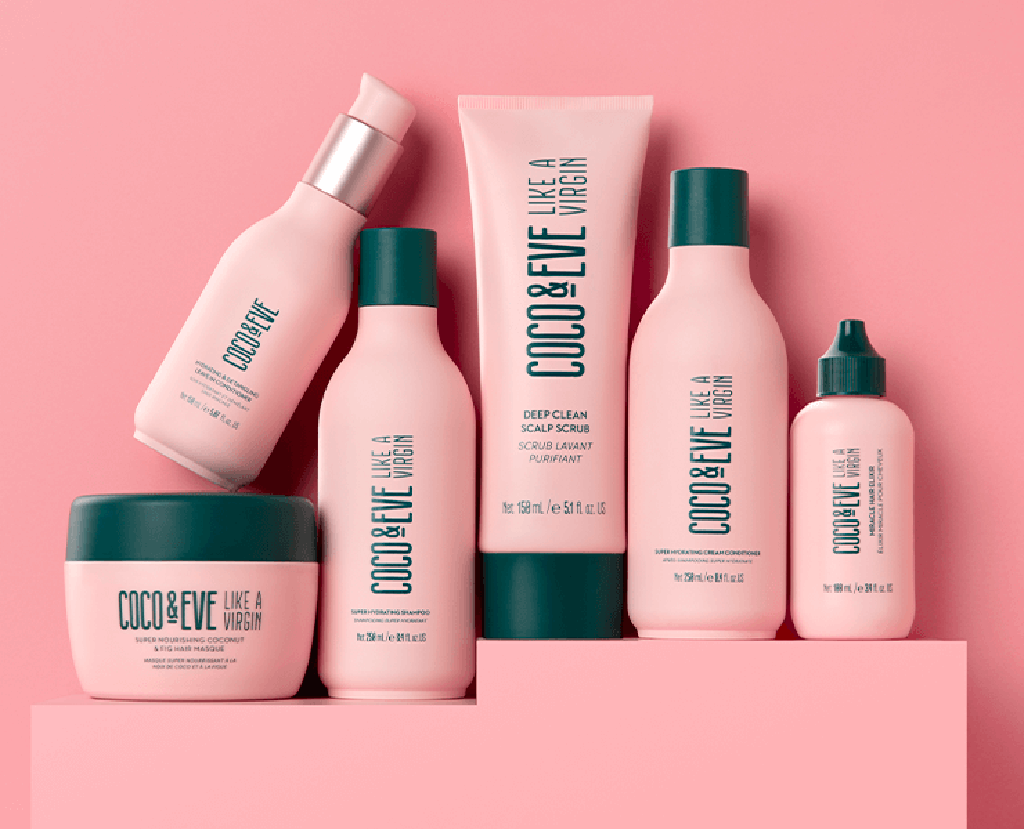
Within its hair care line, three categories of ingredients play the most important roles: virgin coconut oil, fig extract, and avocado oil. The role of coconut oil here isn’t simply to make hair “greasy” or “oily”; rather, it helps form a lightweight protective layer on the strands, reducing moisture loss while smoothing down the hair cuticle to eliminate that rough, raised texture.
Fig extract focuses more on antioxidant benefits and softening the hair; for dry, parched hair, it improves the tactile feel, preventing that “dry, stiff, and brittle” sensation.
Avocado oil acts as a reparative oil; its molecular structure is relatively gentle and easily absorbed by the hair. When used on hair damaged by bleaching or dyeing, it boosts smoothness without weighing the hair down or feeling overly heavy.
In my experience, the key to this combination isn’t “intense repair,” but rather “minimizing irritation + sustained hydration,” so there is no tight or parched feeling after use.
III. Hair Care Line vs. Tanning Line: Two Distinct Botanical Approaches
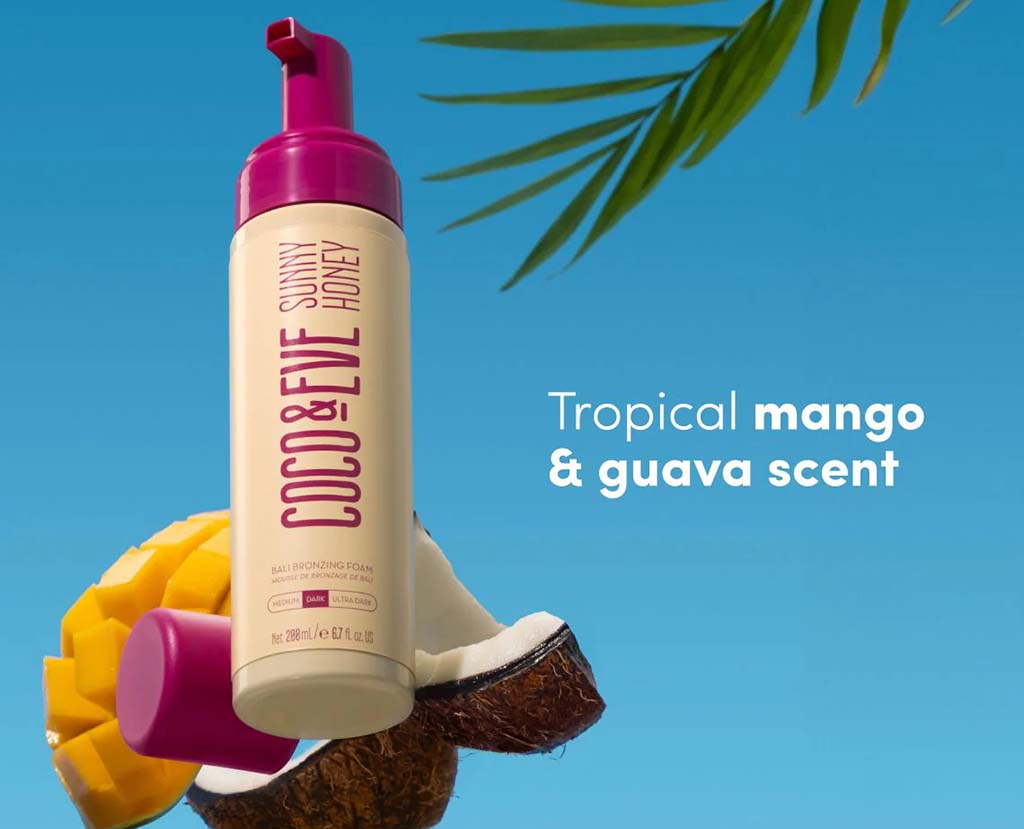
Many people only know Coco & Eve for its hair care products, but the brand actually features a comprehensive self-tanning line.
The hair care line relies on a “lipid-plus-repair” structure featuring ingredients like coconut, fig, and avocado oil, focusing on moisturizing the hair strands and sealing the cuticles.
The tanning line (Self Tan series), however, employs a different system—using ingredients like lotus flower, papaya, and cocoa extract—which aligns more closely with skincare principles.
Lotus extract offers soothing and antioxidant benefits, papaya enzymes provide gentle exfoliation, and cocoa extract visually enhances skin tone evenness and radiance.
The interesting thing about this system is that it doesn’t just aim to “make skin darker”; it emphasizes achieving a “healthier-looking complexion.”
In terms of formulation, one line targets the hair fiber structure while the other focuses on the skin’s surface condition; essentially, they are two product lines developed by the same brand based on a shared “tropical botanical” philosophy.
IV. Safety Analysis by User Group: Can People with Sensitive Skin, Oily Scalps, or Pregnant Women Use It?
This is the part I care about most.
Let’s start with sensitive skin. Because the formulas avoid sulfates and certain irritating preservative systems—and rely primarily on plant-based oils—they are generally gentle on the skin barrier. However, there is a caveat: plant-based ingredients do not automatically equate to being “hypoallergenic.” This is especially true for essential oils or natural extracts; those with sensitive skin should still perform a patch test.
Now, consider those with oily scalps. Since the cleansing system is relatively gentle, individuals with very oily scalps might find the cleansing power insufficient. It may be necessary to alternate with an oil-control shampoo to avoid a slight feeling of residue.
In contrast, this product is actually a better fit for dry scalps and hair damaged by bleaching or dyeing; its blend of oils and botanical extracts helps alleviate dryness, tightness, and breakage.
As for pregnancy and breastfeeding—a major concern for many—the product generally avoids known high-risk irritants (such as sulfates and parabens), making it relatively safe in terms of ingredients. However, strictly speaking, there is no such thing as a “perfectly safe brand” for pregnancy skincare or haircare; individual sensitivity and medical advice remain the deciding factors.
My personal take is that for low-risk, daily haircare needs, it is a “relatively worry-free choice,” though it cannot replace professional medical judgment.
V. Comparative Analysis: Fundamental Differences Between Drugstore, Salon, and Coco & Eve Products
If we categorize haircare systems into three types, the differences become quite clear.
Drugstore products generally focus on “immediate cleansing and basic smoothing.” Their advantages are affordability and wide availability, though their ingredient formulations tend to be basic.
Salon-grade treatments (including protein straightening and reconstruction therapies) focus on “high-potency intervention.” While results are rapid, they are short-lived and can place a heavier long-term burden on damaged hair.
Coco & Eve’s natural botanical system falls somewhere in between: it lacks the intense, instant impact of salon treatments but places greater emphasis on long-term repair and gentleness than basic drugstore products.
In other words, it is positioned not as an “emergency fix,” but as a way to “maintain hair health.”
VI. How to Use the Official Website Tool to Choose the Right Product (Many People Do It Wrong)
I later discovered a very useful feature on the Coco & Eve website: a selection tool based on skin and hair type.
The tool works by recommending product combinations—rather than just individual items—based on factors such as scalp condition, hair thickness, and whether the hair has been chemically treated (dyed or permed) or damaged. Personally, I start by entering keywords like “bleached hair + dry ends + frizz”; the system then automatically isolates relevant hair serums, masks, and wash-and-care sets—a process far more efficient than making blind choices on my own.
It also features a comprehensive ingredient lookup tool, allowing you to view the exact composition of each product and compare factors such as sulfate content, preservative systems, and the proportion of botanical oils.
This step is crucial for individuals with sensitive skin or those who are pregnant, as “gentleness” shouldn’t be judged merely by marketing claims but by analyzing the specific ingredients involved.
VII. My Overall Conclusion: It Functions More Like a “Long-Term Maintenance System” Than an “Intensive Repair Tool”
After using the products, my understanding of Coco & Eve is clear: it isn’t a brand that promises an “instant transformation” of your hair’s condition; instead, it focuses on long-term stability and maintenance.
Its strengths lie in its gentleness, comprehensive botanical formulations, and ease of use; its limitation is that it lacks the intensive repair capabilities found in salon-grade or heavy-duty restorative products.
However, for most people—especially those with sensitive skin, or those seeking routine care after mild coloring or perming—its value is far more practical: it isn’t about achieving an overnight miracle, but rather preventing your hair’s condition from getting worse.