Once winter arrives, my hair basically goes into “meltdown mode.” It’s not just about dryness; it’s a complex mix of breakage, frizz, and split ends all at once. The most obvious sign? My hair looks fine right after brushing in the morning but turns into a frizzy mess by the afternoon; a single pass of the brush often leaves a strand or two of broken hair in my hand.
A more practical issue is that I’ve tried professional salon treatments—like protein smoothing or deep conditioning—but they’re expensive and the results are fleeting. Sure, my hair feels silky right after the treatment, but it reverts to its old state after just one or two washes; sometimes, the texture even becomes stiffer and more brittle. This is especially true for bleached hair, which already has a compromised, hollow structure. Layering on high-intensity protein treatments can actually lead to a situation where the hair feels smooth on the outside but is even more brittle on the inside.
I eventually changed my approach. Instead of looking for a “quick fix” to save my hair in one go, I sought a care routine I could maintain consistently at home. That’s what led me to start using Coco & Eve regularly.
I. The Real Issue with Bleached Hair: It’s Not Just Dryness—It’s a “Hollowed-Out Structure”
Many people think hair damage from bleaching is simply a matter of dehydration, but the real, serious problem lies in the hair’s internal structure.
Bleaching breaks the keratin chains inside the hair, creating gaps in the core. The hair doesn’t just get dry; it becomes brittle. You might notice a strange phenomenon: the hair looks intact, yet it snaps the moment you brush it—a problem that’s especially pronounced when the hair is wet.
Winter amplifies this issue significantly. Cold air makes it harder for hair cuticles to seal, while indoor heating rapidly strips away moisture, trapping the hair in a cycle of cracking and dehydration. Add static electricity to the mix, and the strands repel each other, creating a visually chaotic, frizzy mess.
At this stage, relying solely on ordinary conditioner rarely helps, as it only smooths the surface without addressing the underlying structural damage.
II. Bond Therapy: A System That Changed My “Wash Routine”
I first tried the Coco & Eve Bond Therapy range with a bit of skepticism because its logic differs completely from traditional hair care—it follows a “repair first, cleanse second” approach. The core product is the Bond Therapy Pre-Shampoo Repair Serum. Its “Cutibond” repair complex works by penetrating the hair shaft before washing to partially fill the “hollow structures” caused by bleaching, while simultaneously forming a protective film on the hair’s outer layer.
I was initially skeptical about the concept of “pre-shampoo repair,” as hair care routines usually involve treating hair after washing. However, after actually using it, the most noticeable change was in the washing process itself.
I used to dread dealing with wet hair because it is at its most fragile state then—prone to breaking with even the slightest rubbing. But after using Bond Therapy, my wet hair felt significantly more stable. There was less resistance when combing or running my fingers through it, and—not just a psychological impression but a visible difference—hair loss dropped noticeably.
More importantly, it doesn’t just provide “surface-level smoothness”; the hair strands actually become more resilient and gain a sense of elastic support—something ordinary conditioners simply cannot achieve.
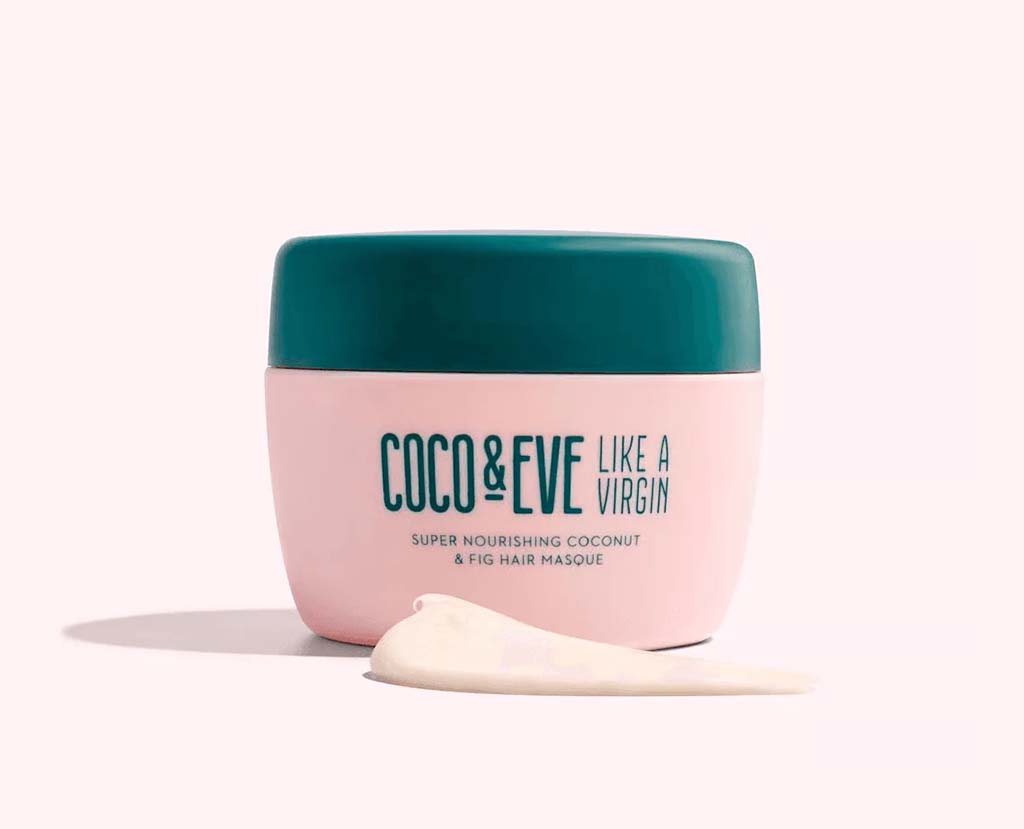
III. Like A Virgin Hair Masque: Tackling “Bone-Dry, Lifeless Hair”
The Coco & Eve “Like A Virgin” Hair Masque—from the same brand—is another staple product I use regularly.
Unlike many hair masks that rely on silicone to create a “fake” slippery feel, this one focuses on genuine hydration and restoring softness.
Ingredients like coconut oil and fig extract provide a distinct experience of being “moisturizing without feeling greasy.” It doesn’t weigh the hair down or make it go flat, yet it visibly tames the dry, stiff, and frizzy state of the ends.
To me, it addresses the tactile feel of dryness rather than just visual smoothness. Many products make bleached hair look shiny while it still feels rough to the touch; this mask, however, eliminates that sandpaper-like texture, allowing the hair to regain a soft, fluid movement.
The improvement is especially striking when using it as a deep-conditioning treatment in winter: the ends stop sticking out in all directions and instead naturally clump together.
IV. Bond Therapy vs. Olaplex: It’s Not About Which Is Better, But Their Completely Different Approaches
I have also used Olaplex for a long time, so the comparison is quite clear to me. Olaplex’s core approach is pure bond repair—focusing on structural reconstruction—which leaves hair feeling noticeably stronger. However, this strength can sometimes come with a bit of stiffness or dryness; especially in winter, without added hydration, the strands might feel tight rather than soft.
In contrast, Coco & Eve Bond Therapy operates on a “repair-plus-moisturize” principle. While repairing the hair structure, it incorporates botanical oils like coconut and fig, allowing the hair to regain resilience while remaining soft.
The difference is clear:
Olaplex is like “reconnecting broken structures”—a heavy-duty repair treatment;
Bond Therapy is like “repairing while nourishing”—focused on long-term maintenance and stability.
For me, I prefer Olaplex when my hair is severely damaged, but for daily maintenance, Bond Therapy offers a more comfortable and consistent experience.
V. My two-part winter hair care routine
I currently split my routine into “intensive repair” and “maintenance.”
The intensive repair routine happens once a week, usually when my hair is noticeably dry and the ends are starting to frizz. I apply the Bond Therapy pre-wash repair treatment to dry hair—focusing on the mid-lengths and ends—and let it sit for about ten minutes. This step is crucial because it puts the hair into a “repair mode” before washing. Instead of rinsing it out, I layer the “Like A Virgin” hair mask over it for a deep treatment, wrapping my hair in a shower cap for 20 to 30 minutes.
After rinsing it off, the most noticeable change isn’t just “smoothness”; it’s the significant reduction in friction between strands. My comb glides through without snagging or snapping, and the hair feels more cohesive and manageable overall.
The daily maintenance routine is much simpler. I don’t do a deep mask treatment every time; instead, I quickly apply a little pre-wash serum before shampooing, use a lightweight conditioner, and finish with a touch of leave-in serum while my hair is damp. The goal here isn’t “intense repair,” but rather keeping the hair stable and balanced—avoiding overload, which can weigh the hair down and make it go flat.
VI. On Efficacy Data and Real-World Experience
When brands cite figures like “65% less breakage” or “71% more smoothness,” I prefer to interpret them as trends in improvement over long-term use rather than the results of a single application.
Based on my actual experience, the changes occur in stages. The first stage involves reduced hair loss during washing; the second sees the hair becoming more resistant to breakage; and the third results in hair that is generally easier to manage and holds its style better.
It isn’t the kind of product that delivers a “wow” factor after just one use; instead, it gradually pulls hair back from a state of progressive deterioration to a manageable condition.
VII. Key Usage Details That Are Easily Overlooked
For those with bleached, fine, or soft hair, the most common mistake is actually “overusing repair products.” Anxiety about damage often leads people to layer on serums, masks, and oils, but the result is frequently hair that goes flat—leaving no room for styling the next day.
In my experience, with fine hair, it is crucial to control the contact time of pre-wash products; exceeding the recommended duration too much can lead to a feeling of “over-nourishment.” Similarly, there is no need to apply a thick layer of hair mask every time; a light, routine treatment suffices.
Another easily overlooked issue is the amount of leave-in product used. Excessive application directly affects hair volume; especially in winter—when wearing hats or styling—it can easily cause the hair to lie flat against the scalp.
VIII. Changes After a Full Winter
Looking back now, my hair hasn’t reverted to its “pre-bleached” state, but it is at least no longer in a state of continuous decline.
I used to feel anxious about hair loss every time I washed my hair; now, washing it is just a normal routine that requires no mental preparation. Although the ends remain damaged, they are no longer on the verge of snapping at any moment; instead, the condition is now manageable and stable.
For those with bleached hair, this kind of change is actually more realistic than “instant repair.” The real challenge isn’t achieving a sudden, total fix, but rather preventing the condition from getting worse.